At Zingerman’s, learning is valued! Every year, several staff scholarships are awarded through an application process. I feel grateful and fortunate to have won the staff scholarship twice in my 10-year career here at BAKE!, the teaching school at Zingerman’s Bakehouse. As an instructor, it is so important for me to be a beginner again, forget about what I know, and listen with an open mind, as well as experience the joy and anxiety that can both come from learning. This February, I used my staff scholarship to attend an artisan bread course in Italy. I did little research before I left. This is unusual for me! I found it was an excellent opportunity to practice being in the moment and to surrender to what my travel offered. Not just bread learning, but good life learning, too.
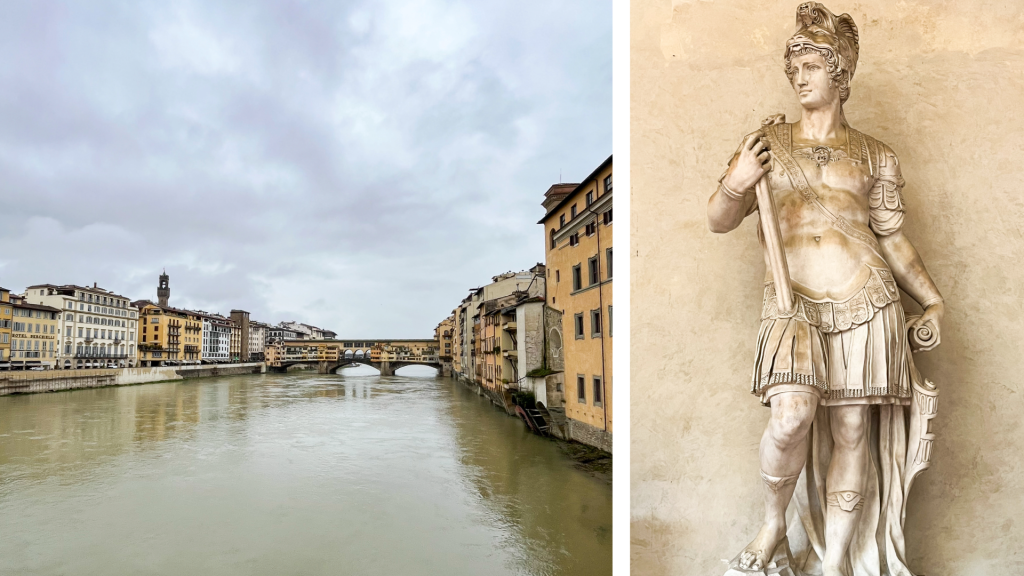
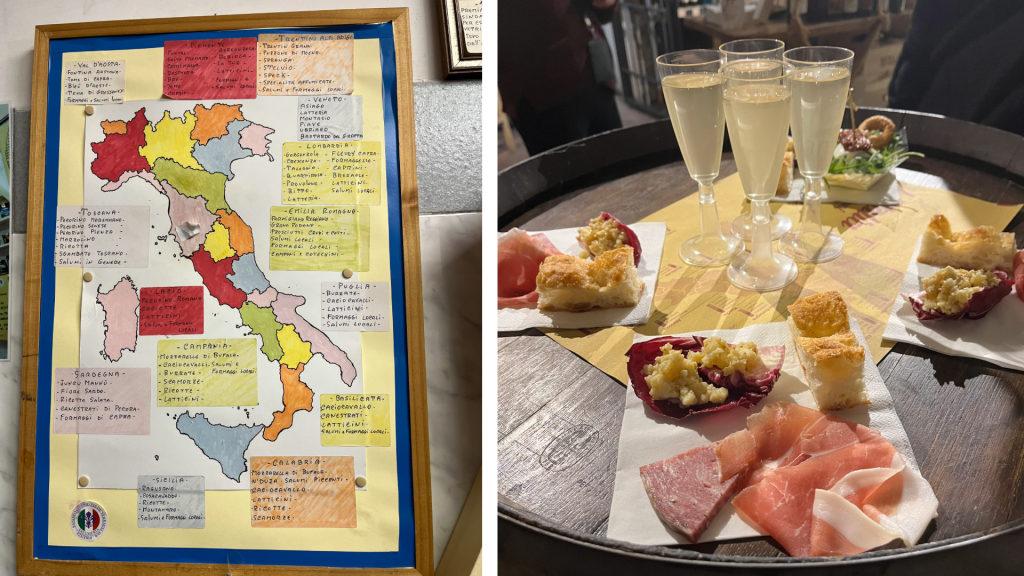
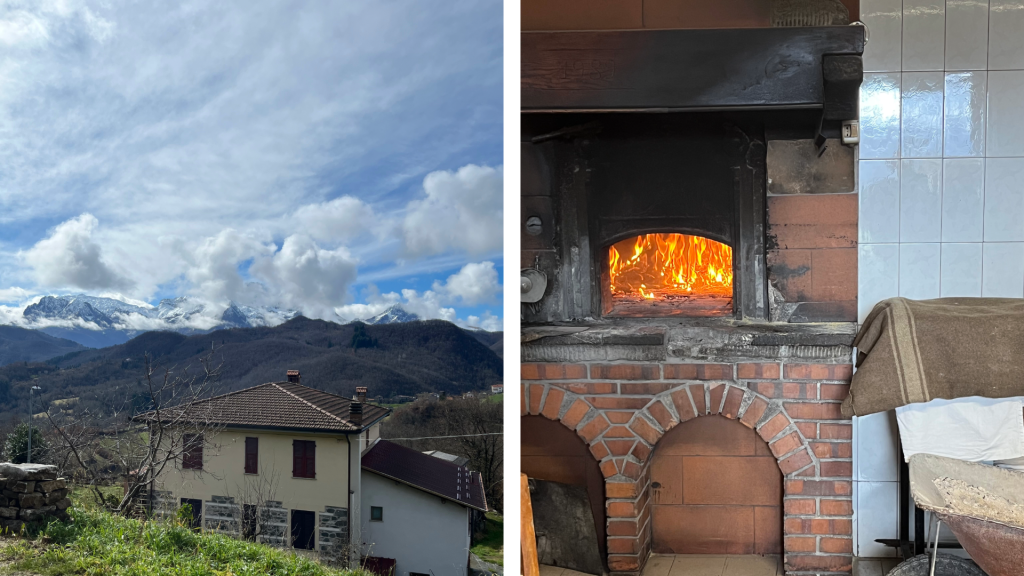
The program I chose, Sapori e Saperi, meaning “flavor and knowledge,” was a great fit for me. It consisted of visiting artisan bread bakers and millers in Tuscany, specifically in an area between the mountains Apennines and Alpi Apuane, called the Garfagnana. This area is known for its sweet chestnut trees and farro. At Zingerman’s Bakehouse, we are artisan bakers and we actively explore the use of flours from many different small grains and nuts. This course promised to inspire me.
Flavor & Knowledge
Here are some things I learned about:
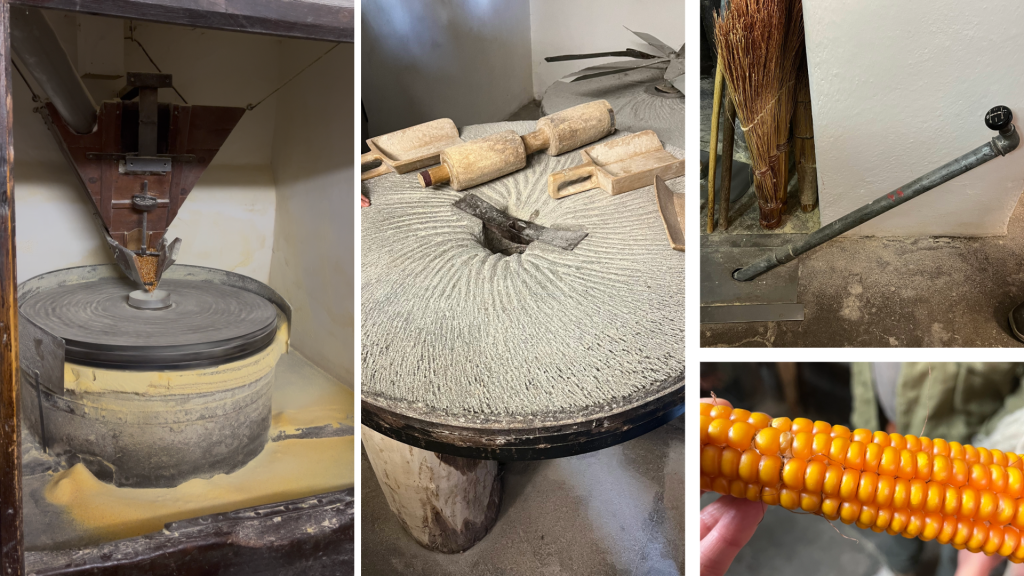
- Corn, a new-world crop, has been in Italy since 1500. It is still widely grown and is a common element in baking and cooking. Eight Row Flint Corn is an heirloom variety grown particularly for flavor. We made criscolette, a flat bread made with flint corn and wheat flours on a griddle. Thinly sliced pancetta is placed on top once it is cooked through and the fat melts into the flatbread. Yum!
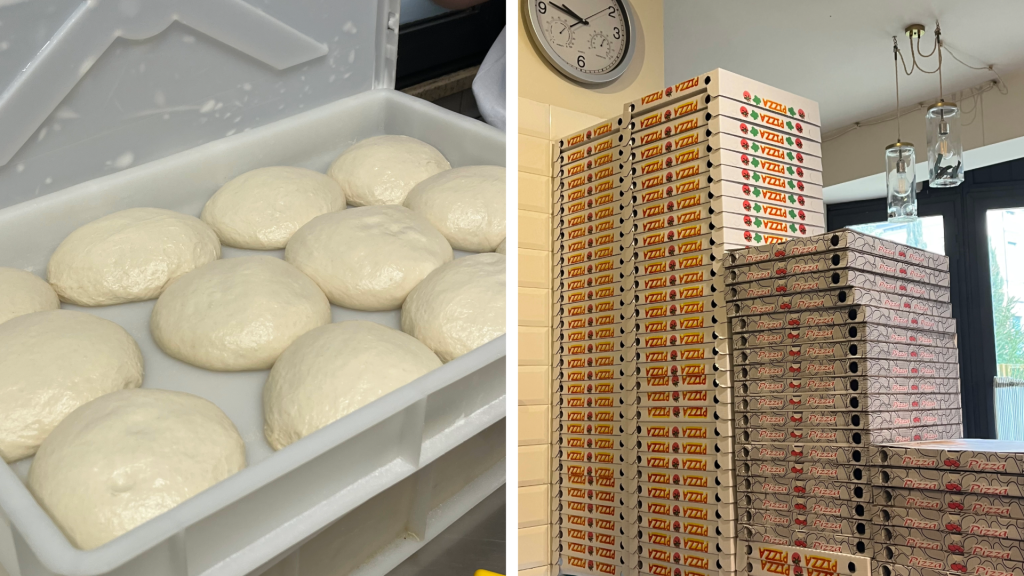
- Table bread is alive and well in Italy, but pizza and focaccia reign supreme. We made a focaccia with a biga and a liquid starter. A biga is a yeasted preferment and the liquid starter was naturally leavened. The focaccia was light and airy with a soft, open crumb. It wasn’t sour in flavor, which isn’t better or worse than using commercial yeast, just a different flavor.
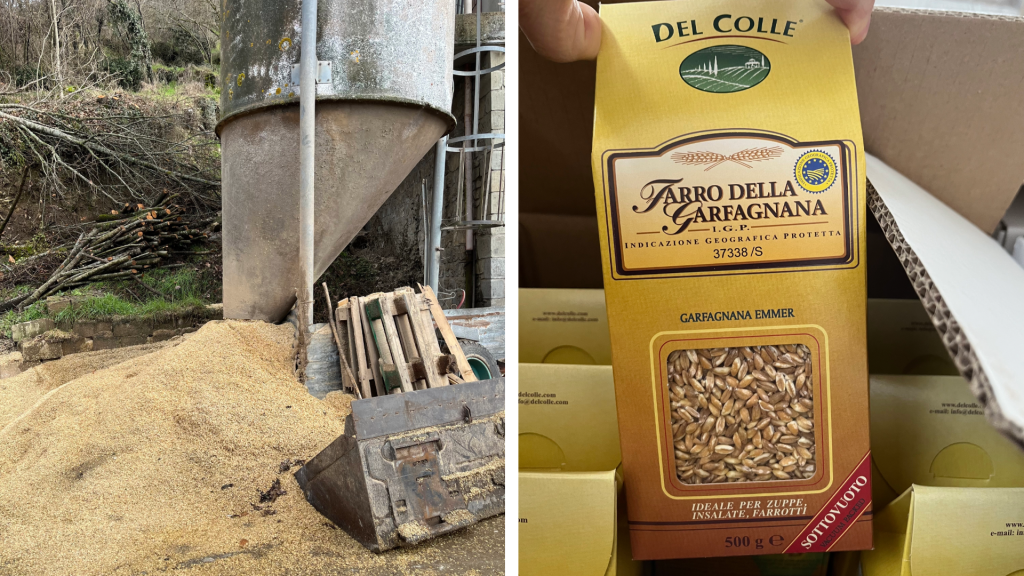
- Farro in Italy is emmer, a high protein/low gluten-forming heirloom grain. It can be used for breads in combination with all-purpose or bread flour. Yes, a grain can be high in protein but not have strong gluten properties. It is used to make egg pasta and cookies, and is cooked in soups and stews. We used it to make a wood-fired naturally leavened loaf with potato in the dough.
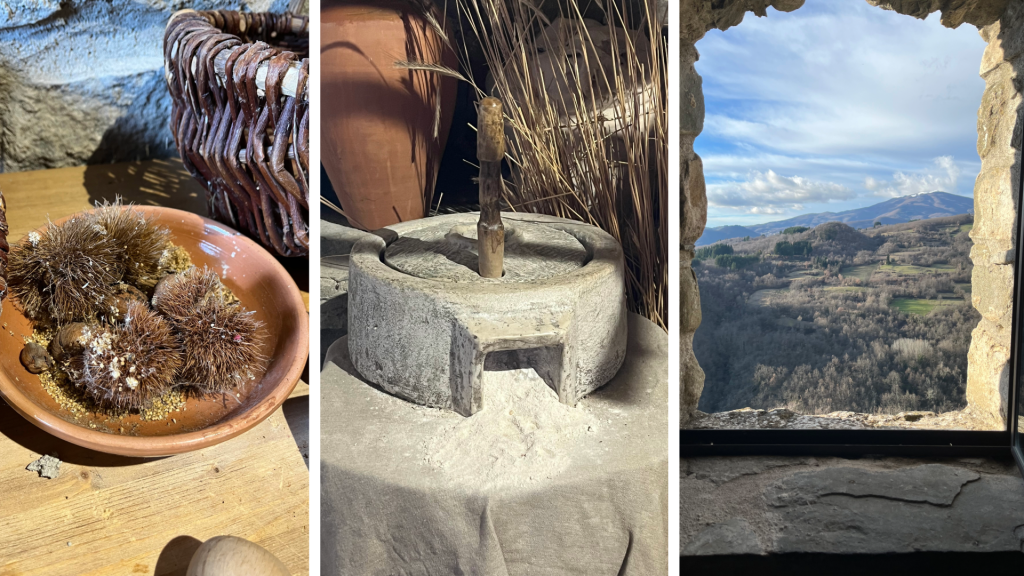
- Sweet chestnuts are harvested, dry smoked over chestnut wood fire, and finely ground into flour for pasta, cookies, and necci, a thin pancake filled with ricotta.
- Naturally leavened bread in Italy is not sour. Here in the US it is both sour and not sour.
- One of my more surprising learnings was about 00 flour and the flour grading scale used in Italy.
Italian Flour Scale
Here is a scale to help understand the flours in Italy:
- 00 – patisserie without yeast and fresh pasta, pastry creams, and sauces
- 0 – patisserie with yeast and flatbreads
- 1 – bread
- 2 – bread
- integrale – whole wheat bread flour
Some years ago I came across 00 flour from Italy. It seemed very exotic. It is marketed for a long-fermentation pizza dough. I went around repeating what was on the bag—it was “wheat milled extra fine for long fermentation”. If you look at a bag, it says “soft wheat flour.” Softer wheats are used for cake and pastry flour, as well as being blended for all-purpose flour. Why do we need to care about that, you ask? Because we want to choose the correct flour for the best results. It is soft and harder wheat milled super fine which makes the labeling very confusing.
Equally important is the W value which indicates how much air the dough will take in according to one of the bakers we visited. This means the rising power, elasticity and extensibility. Italian bakers rely on both the milling number and the W value. The 00 flours are proprietary blends that belong to the mills and Italian bakers use the one that they find appropriate for their products. A few that we visited combined it in their kitchen with Manitoba, a strong red spring wheat from Canada, panettone requires strength to achieve that ethereal result.
How Italian bakers use 00 flour really surprised me. Each baker we visited in Italy used “00” in combination with “1” flour, and another flour called Manitoba, grown in Canada, probably in the Canadian province of that name. Manitoba flour is a strong hard red spring wheat with strong gluten qualities. They use this to create an open crumb in a variety of breads as well as to support long fermentations (for example, in a naturally leavened panettone).
My week in Italy was time well spent. I returned to the US with a better understanding of some of the breads and flours in Tuscany, including the saltless bread which is really a carb accompaniment for soups and stews, not meant to be eaten on its own. Travel allows us to get away from the day-to-day, as well as see things with new eyes. I am inspired to share what I learned. I leave you with Lao Tzu: “A good traveller has no fixed plans and is not intent on arriving.”
Susan was born and raised in the metro Detroit area. After earning a B.S. in Clothing and Textiles at MSU, she began a lifelong love of cooking, travel, and new food discoveries. Early food memories from both sides of the family were the foundation for a lifelong pursuit of great food, including pies and birthday cakes made for her by her maternal grandmother and the annual visits to her paternal grandmother in California, where she "helped" at the family's grocery store. Susan attended Schoolcraft College of Culinary Arts, where she earned a certificate in baking and pastry in 2007. She first joined Zingerman's Bakehouse during the 2008 holiday season in the pastry kitchen where she learned production baking. She found her way to teaching in 2012, and happily returned to Zingerman's Bakehouse in 2015. Susan is passionate about baking and sharing knowledge.
Love this all. I graduated too from Schoolcraft College. 2011 Macro Associates degree in the Science of Culinary Arts. Doing care giving right now. I really miss Culinary Arts! Would love to work with this 3 days a week. My Grandparents came over from Italy and my Mom’s side from Paris. I’m a Huge Foodie!
God Bless All!