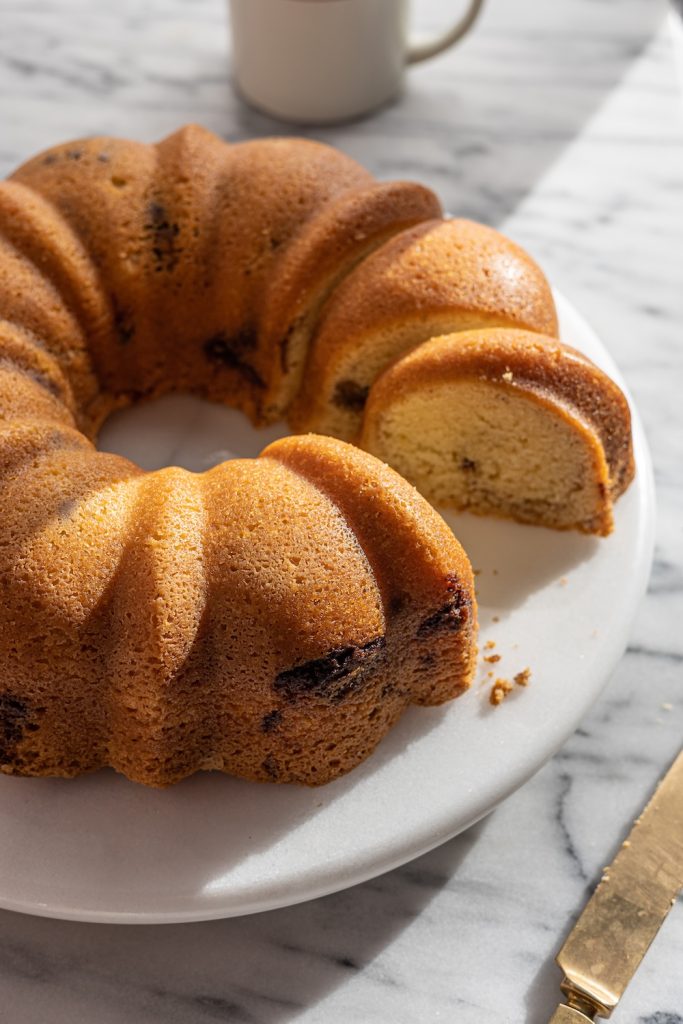
We have been baking our classic Sourcream Coffeecake–with its signature cinnamon and toasted walnut swirl–since the mid 1980s and it remains one of our most beloved items. Even so, I realized I’d been neglecting it. It’s low maintenance–solid, consistent, and endlessly reliable. Although I taste it at least once every week to make sure it’s as it should be, I had to some degree stopped giving it any other attention. I was taking it for granted! No longer! Let’s celebrate it.
In case you’ve been walking past it without a second glance, let me reacquaint you with this classic cake. Our Sourcream Coffeecake is unassuming in appearance yet deeply satisfying in flavor. It is full of tasty fat—half a pound of award-winning Vermont Creamery Cultured Butter, half a pound of sour cream, and three whole eggs—which yields a mellow slightly tangy crumb. Contrasting this mellowness is the distinctive flavor of the cinnamon-nut swirl created with Indonesian Korintje cinnamon, brown sugar, and freshly toasted walnuts. Together they make a classic, crave-able flavor combination.
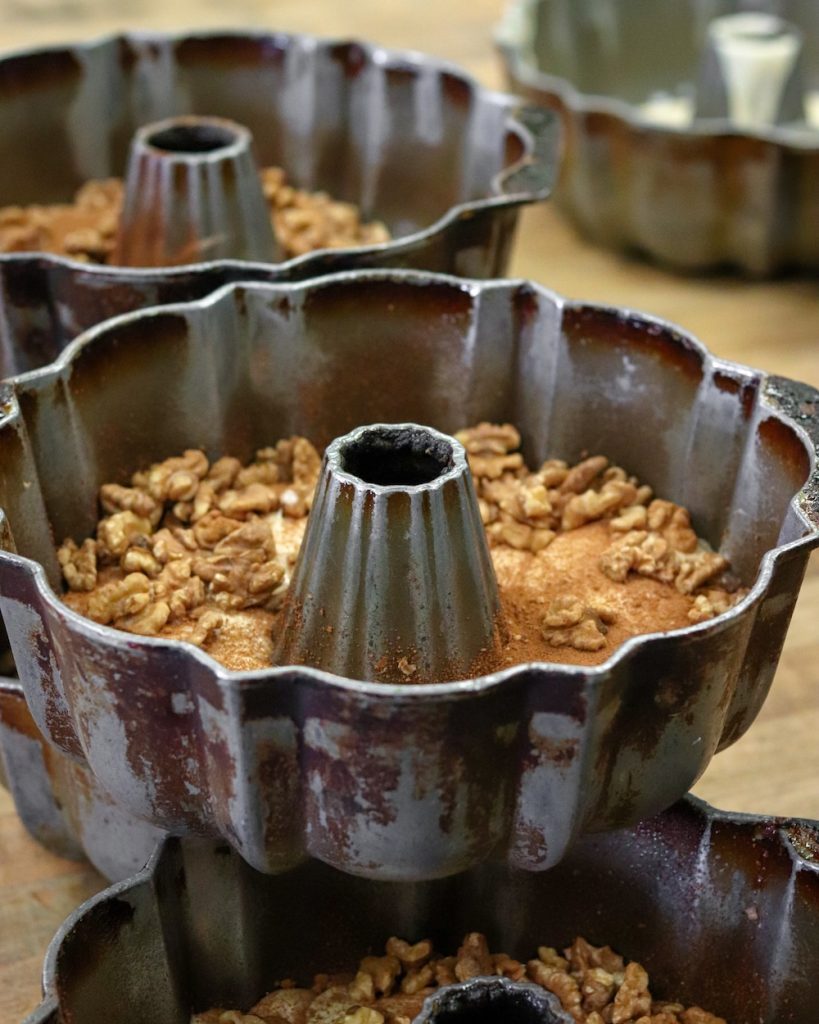
Our Sourcream Coffeecake was first made at Zingerman’s Deli. The origin of the recipe has unfortunately been lost to time, but we do remember one of the Deli’s first bakers, Ellie Marks. According to Zingerman’s founder, Ari Weinzweig, Ellie and others would go down to the basement of the Deli each morning and butter up a few Bundt pans to prepare for the day’s business. On weekdays, they made one cake; on busy weekends, two or three. In the early 1990s, three of the Deli’s bakers and their recipes, including the Sourcream Coffeecake, moved to Zingerman’s Bakehouse where it’s been made ever since.
What used to be just one or two or three a day has since grown dramatically. As time went on, the Deli became more popular. We opened our own shop at the Bakehouse, and Zingerman’s Mail Order started sending them to fans around the world (yes, around the world–pre 9/11, it was possible to affordably and logistically ship perishable food around the world!). For years, our coffee cakes were never packaged and labelling wasn’t required! Conversations about allergens were rare. What a different world it was!
What’s not changed over all these years is the recipe! All of the proportions have remained the same. We still use real ingredients that we’d all recognize and be able to buy a version of in any grocery store and we’ve never succumbed to adding preservatives, enhancers, or other thingamajigs found in manufactured baked goods that I have no idea what they do!
Along the way, we have made improvements. Now we use organic all-purpose flour, which in the 1980s was not very popular or readily available. The Korintje cinnamon supplied by Frontier Spices is definitely an upgrade from what we originally used and last fall we began making our coffee cakes with the award-winning cultured butter from Vermont Creamery.
Coffee Cake’s American Evolution
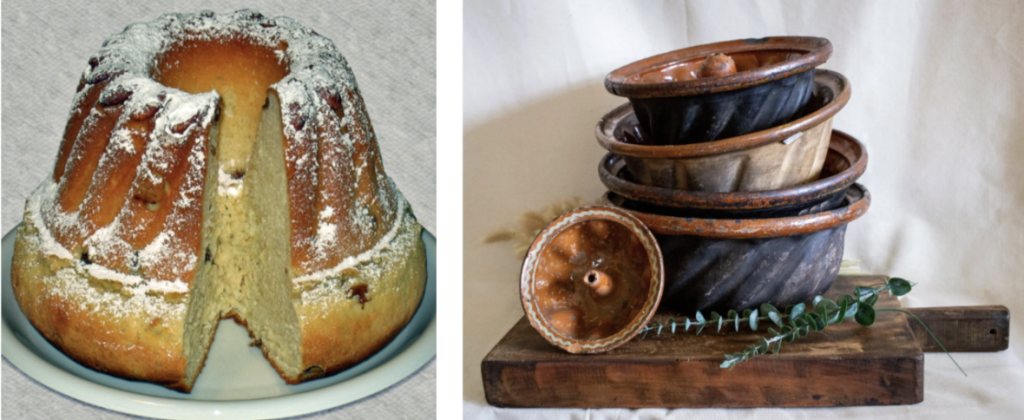

Right: Set of 5 vintage Alsatian Gugelhupf Molds, glazed earthenware. Photo Source: Etsy.com
Where is this cake from? In the 19th century, immigrants came to America en masse. They brought their baking traditions and recipes with them, including the many different iterations of yeasted Coffee Cake baked in Gugelhupf pans. Once here, coffee cake recipes further evolved. By the 20th century, bakers were turning to baking soda and baking powder as leaveners versus yeast, cutting down on the time and skill it took to make them. Ingredients also changed. Eggs, milk, and sour cream became recipe mainstays, leading to a much more hydrated cake batter and a more tender, pound cake-like structure when baked.
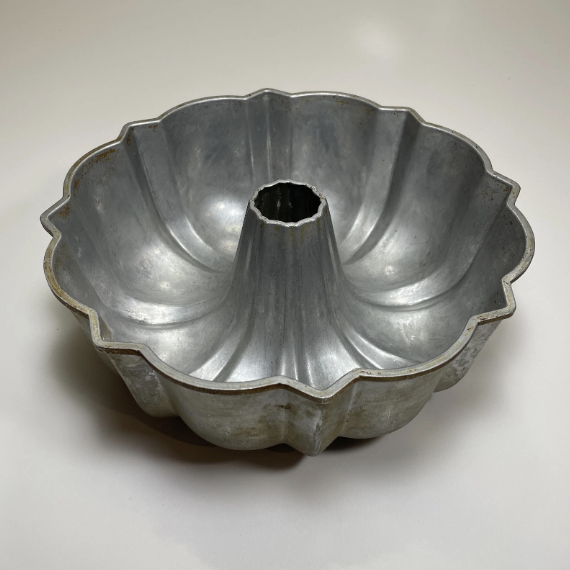
The evolution of American Coffee Cake reached a milestone in 1950 with the advent of the cast aluminum Bundt pan by Minnesota’s Nordic Ware Company. This innovative, light-weight, fluted tube pan allowed for heavier batters and fillings to bake evenly, resulting in the familiar ring-shaped coffee cakes that we know and love today. Now produced in various sizes and fluted patterns, traditional Bundt pans are what we use here at the Bakehouse to bake our full repertoire of coffee cakes.
Feeling curious now about this understated treat? Feel free to ask for a sample if you come to our shop and enjoy the surprising complexity of flavor. If you like to bake, try out the recipe (below) and get the joy of making and eating.
Do you have any personal stories about the role our cake has played in your life? Please share it with me if you do. Send it to [email protected]. We’re collecting them for our next piece about how a food can bring joy and connection in life.
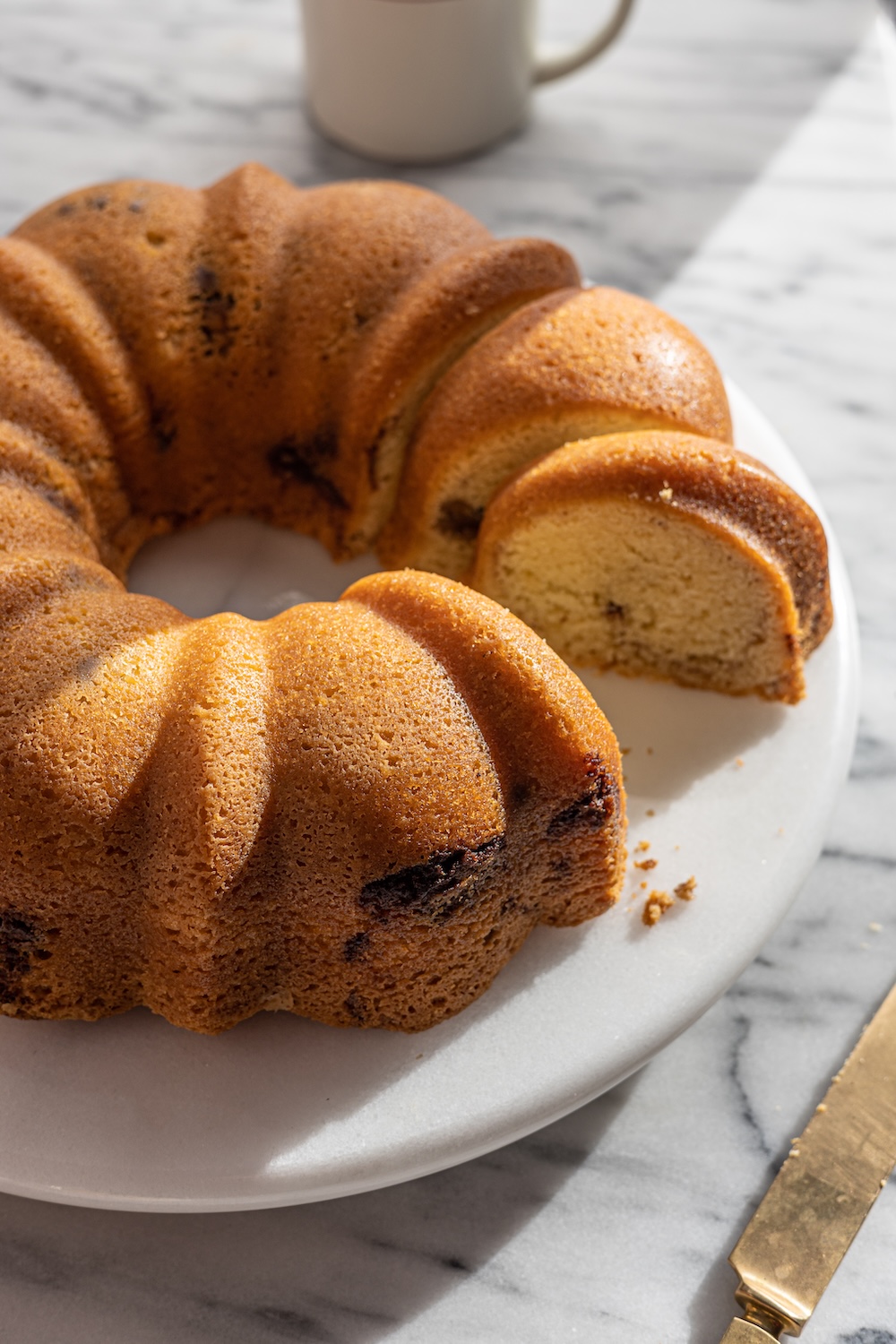
Sour Cream Coffee Cake
Ingredients
Method
- Preheat oven to 325*F. Spray a 9-inch Bundt pan with nonstick cooking spray, coat with flour, and set aside.
- Toast the walnuts on a sheet tray for 10 to 15 minutes, or until they're a deep golden brown. After they are done, turn the oven down to 300*F.
- In a small bowl, mix together the toasted walnuts, brown sugar, and cinnamon. Set aside.
- In a large mixing bowl, combine the sugar and butter. Cream by hand or with the paddle attachment of an electric mixer on medium speed. Mix until the color lightens. Add the eggs, one at a time, creaming thoroughly after each egg until the mixture is homogenous. Add the sour cream and vanilla. Mix briefly until light and creamy. Scrape the sides of the bowl to make sure all of the ingredients are evenly incorporated.
- Combine the flour, baking soda, and salt in a separate medium bowl. Mix to combine. Add the flour mixture gradually to the creamed mixture and mix by hand or with a mixer on low speed until smooth and homogenous.
- Scoop one-third of the batter into your prepared pan. Smooth it evenly over the bottom of the pan with a spoon. Sprinkle one-half of the nut mixture evenly over the batter. Cover with another third of the batter. Smooth it evenly over the nut mixture and to the edges of the pan. Sprinkle the remaining nut mixture evenly over the batter. Spread the remaining batter evenly over the nut mixture.
- Bake for 60 minutes, or until a skewer comes out clean. Cool for 15 minutes. Do not leave the cake in the pan for much longer than this. The brown sugar in the nut filling might stick to the sides of the pan and make it difficult to release the cake.
- Put a wire cooling rack on top of the Bundt pan and then invert the pan to release the cake. Cool to room temperature before eating.

She has been an avid food lover and baker since her childhood in Nova Scotia, Canada. After high school Amy moved to Cambridge, MA and received her bachelor’s degree from Harvard University. She then followed her passion for food and learned to cook and bake at L’ecole de Gastronomie Francaise at the Ritz Hotel in Paris, France as well as in Michigan restaurants. In 1999 she received her MBA from Columbia University.
Amy came to Zingerman’s Bakehouse when it opened in 1992 as one of the original bakers on the staff of eight. She soon became the first manager of the bread bakery, then the manager of the pastry kitchen and in 2000 she became a partner.
Amy has been working in the food world for over 20 years and is passionate about hands-on baking, teaching about baking and business, developing businesses and people. As well as teaching at BAKE! Amy presents for ZingTrain on our business practices. A few of the Bakehouse items she is personally responsible for developing are the Old School Apple Pie, Buenos Aires Brownies, and our Gingerbread Coffeecake. In addition to developing items, Amy is a promoter of classic bakery favorites from many cultures and has brought traditional standards to the Bakehouse such as Paris Brest, Hummingbird Cake, and Maple Cream Cookies.